BACKGROUND
Code is rarely built from scratch.
THE MARKET GAP
Managing developer packages became harder than it needed to be.
Audience Mismatch
The products on the market were designed for large enterprises — complex setups, big budgets and features most teams never use.
The UX Demand
Engineers wanted a better experience.
They searched for workarounds — some went as far as building their own interfaces.
Lack of Alternatives
There was no middle ground — either too much or not enough. Most teams paid for the enterprise option and lived with it.
This wasn't just one team's frustration:
Across developer communities, the same frustration kept surfacing.
When enterprise tools ignore UX, users build their own product-market fit. We decided to build a product around it.



We saw what others ignored — and built around it.
SOLUTION

RepoFlow: Experience-first package management.


Browse repositories
Create your first repository
RESEARCH
What were teams actually living with?

Their tool creates more work than it removes.

Nothing is findable by the people who need it most.

One interface. Two users. Designed for neither.
DESIGN DECISIONS
The decisions that made RepoFlow different.
01 — A repository-centered workspace, shaped by role.
Structure: RepoFlow vs. Competitors
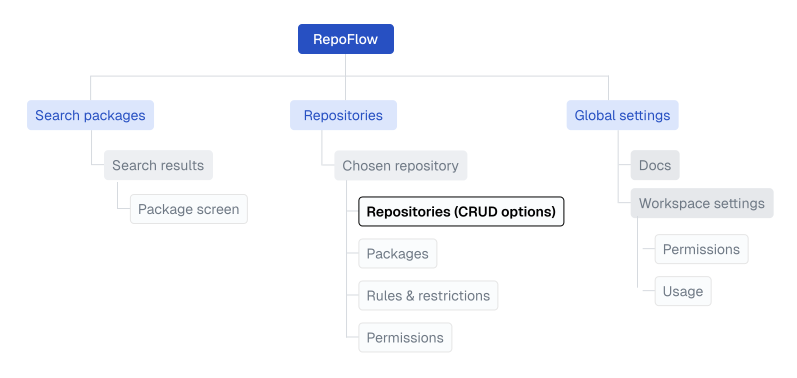
Manage where you work. Everything lives under the repositories.
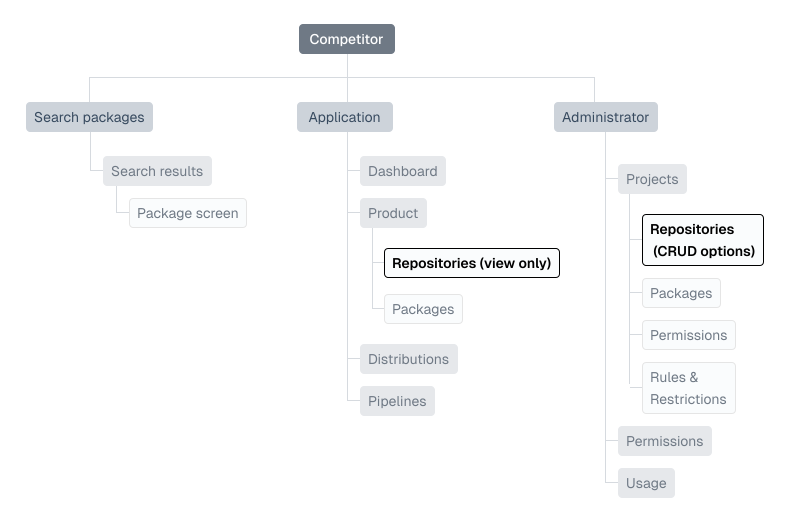
View in one place, manage in another.
02 - Developers deserve to search, not dig.
I removed the file tree and made the package a first-class entity — version, description, everything you need to evaluate it without clicking in. That's the unit you see, search, and act on.
Files vs. packages — two different models.
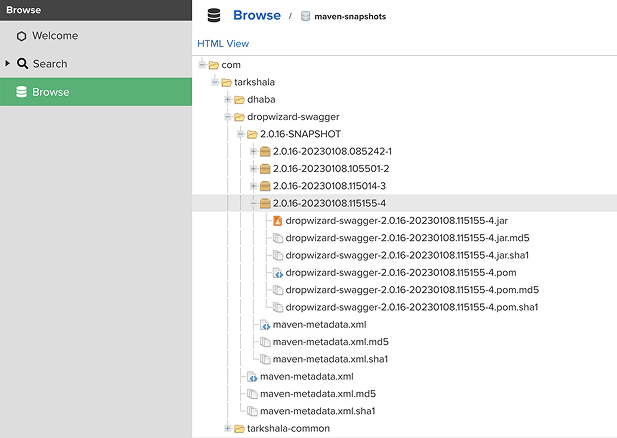
Navigate folders to find a package.


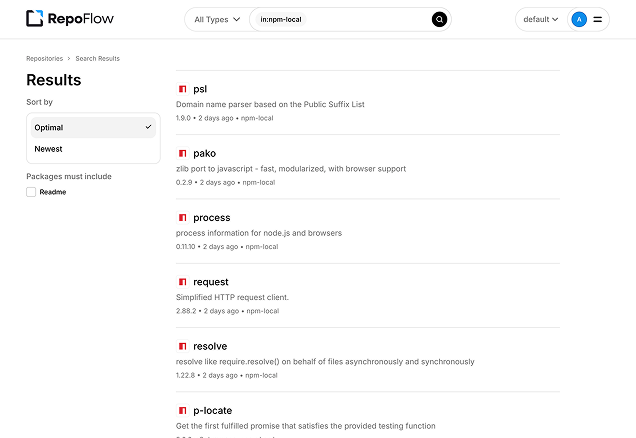
Browse or search packages.
Search followed the same logic. In file-based tools, searching returns names — the developer navigates in to find out what they found. I built search around recognition over recall: name, version, a short description surfaced in every result. Search now spans every repository and reaches inside READMEs.
DESIGN SYSTEM
0→1 startup design system.
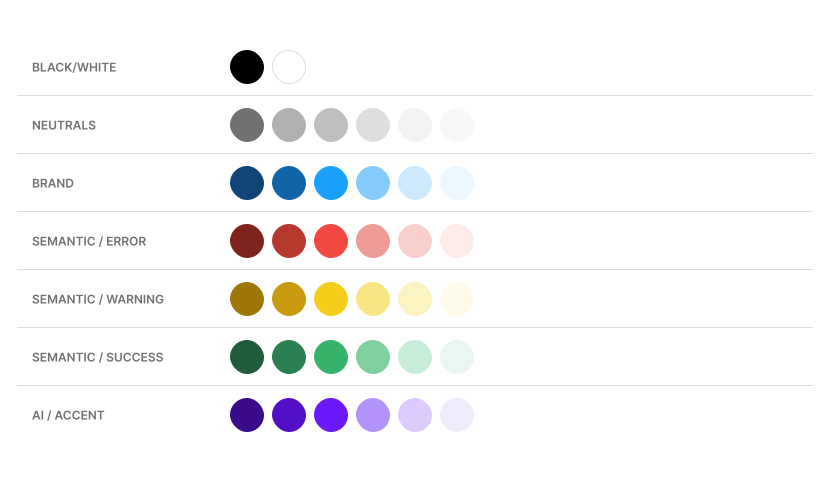
Colors
I chose a light, monochrome base with a single accent color — a deliberate contrast to the dark-mode terminal aesthetic most developer tools default to. Bright and minimalist, it builds trust fast and lowers the barrier for every type of user on the platform.
THE PRODUCT
A. Retention rules
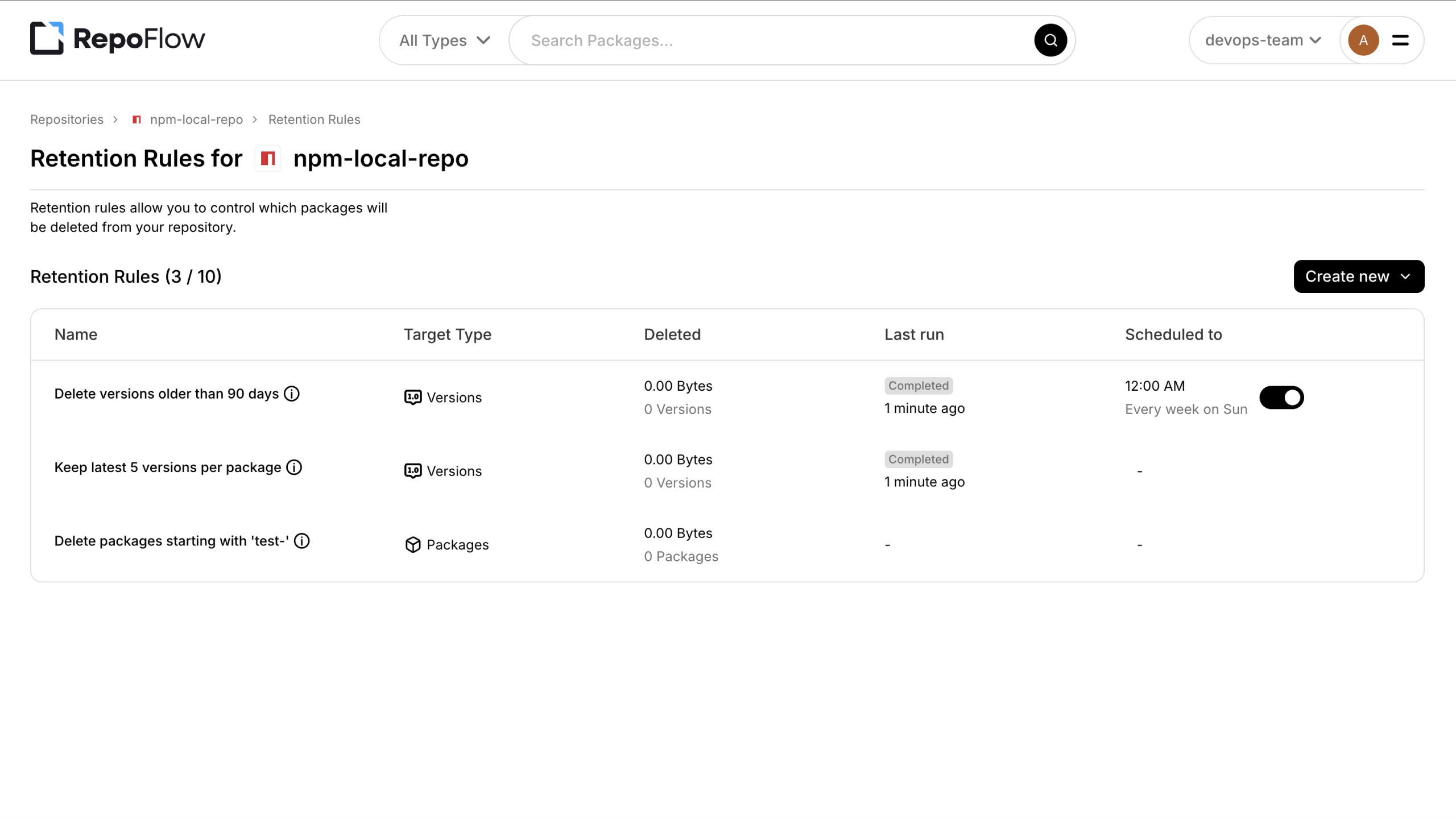
1. Management console
A rule isn't a setting you configure once — it's a process. I designed the table to reflect that: active status, next scheduled run, past results.
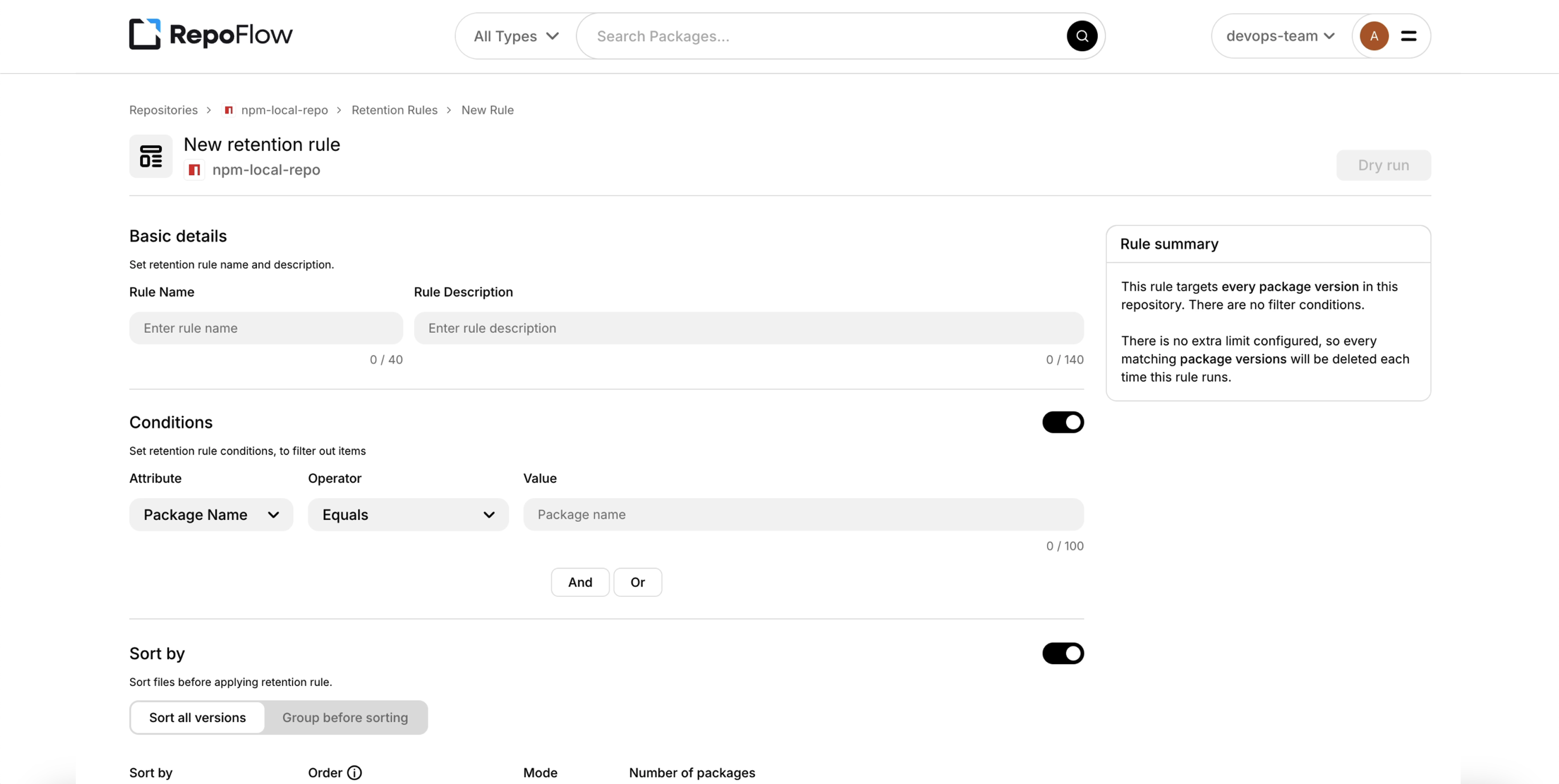
4. Build your rule - Start from scratch
Progressive disclosure inside a complex form — condition groups collapse so the rule stays readable as it grows. The right panel shows a live summary: every choice, its consequence, in plain language.
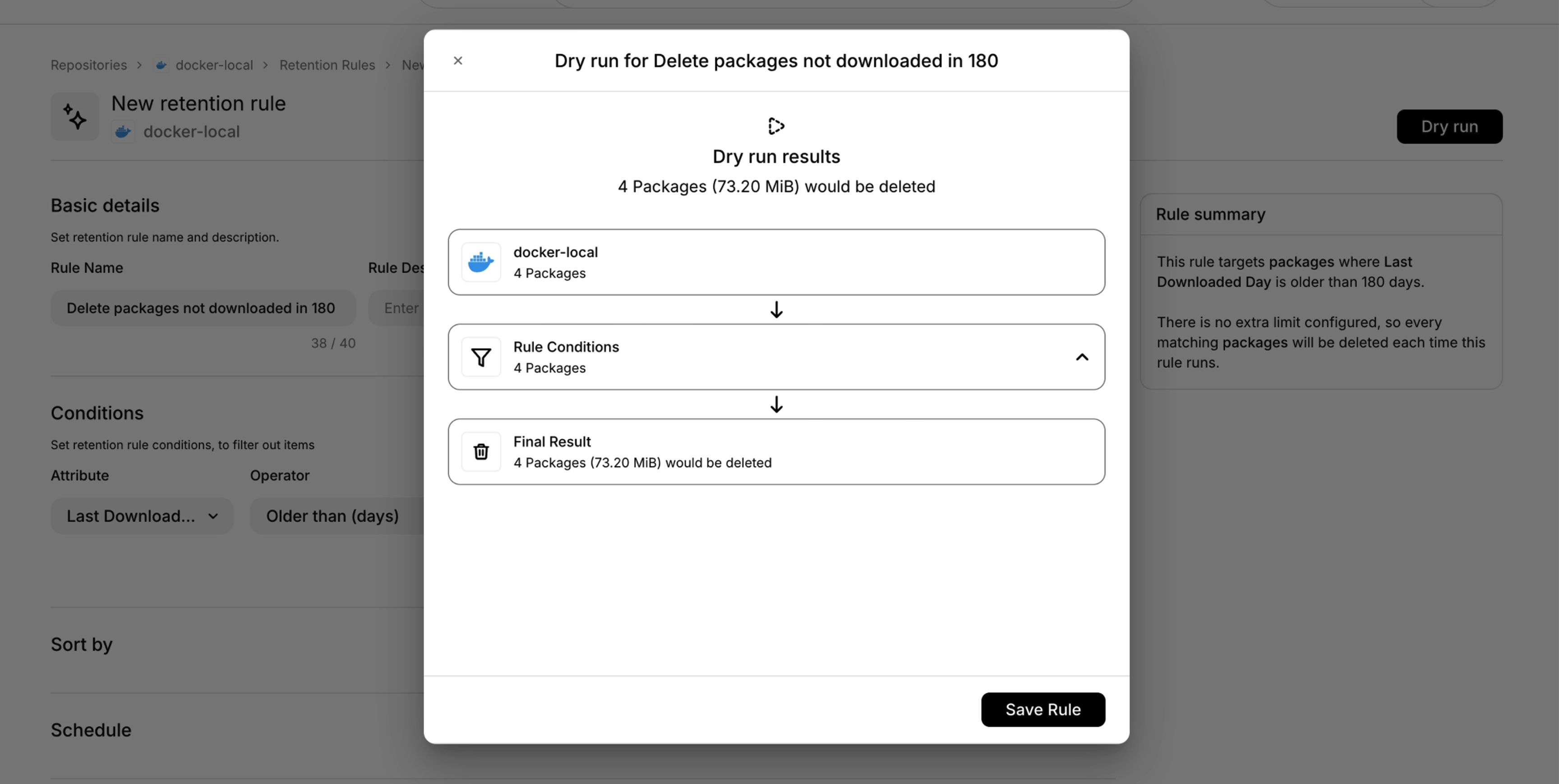
5. Dry run your rule
Before anything is deleted, DevOps sees exactly what would be affected — down to the count and size. Confidence before commitment.
Videos of the entire feature:
Create new rule → Start with AI → Dry Run
UI Builder
Retention rule - Actual Run
B. Uploading packages
C. Create a new repository
REFLECTION
What I learned
In a two-person team, the designer is the only user advocate.
At a startup, there's no design team to push back, no one else asking "but what does the user need here?" I learned to carry that question myself — through every delivery decision, every moment where experience and speed pulled in different directions.
Speed and quality aren't opposites
As a sole designer at a startup, you learn fast that not every decision carries the same weight. Over time, I developed a simple discipline - rating user value and implementation effort from 1 to 10 — an effort impact matrix. High impact, low effort - protect it. Low impact, high effort: - let go. That's what lets you move fast without losing what matters.
RepoFlow is live. Teams choose it for the experience. That's the brief I was given on day one — and it's what we built.